Ganesh Datta
HostCTO & Co-founder of Cortex

Steve Evans
Former SVP of Engineering at Chegg
February 12, 2026

In This Episode
Cortex co-founder and CTO Ganesh Datta sits down with Steve Evans, the former SVP of engineering at Chegg. Steve shares his honest perspective on the "micro" in microservices and explains why making service creation too frictionless can accidentally lead to a massive organizational tax.
The discussion covers the transition from building for hypothetical future problems to focusing on actual business outcomes. Ganesh and Steve also dive into the "game of telephone" that often blocks context from reaching individual developers and discuss why engineering leaders should value qualitative sentiment as much as technical data.
You’ll learn
Engineering teams often over-build for ambiguous future problems that never actually arrive. Build for today's problems to avoid painting yourself into a corner with unnecessary infrastructure.
When the cost of a new service is nearly zero, developers will naturally choose to spin up new ones instead of digging into existing code. This creates a cognitive tax that slows down onboarding and makes working across teams feel impossible.
Technical metrics like release frequency are helpful for spotting anomalies, but they don't tell you if you're heading in the right direction. True productivity should be measured by business KPIs like payment success rates or accuracy of results.
Context often gets blocked as it trickles down from the C-suite to the individual contributor. Small roundtables with mixed groups are more effective than large all-hands meetings for identifying where that context is getting lost.
Leaders should look at the hard data but also pay close attention to the anecdotes and sentiment of their teams. If the metrics look good but the customers or engineers are unhappy, you've still got a problem to solve.
Quotes
"What I was railing against was the micro in microservices. We gave the team a hammer and everything became a nail."
Steve Evans
Former SVP of Engineering at Chegg

"Someone pulls up the service map in your observability platform and it makes the New York City subway system seem simple. You're sitting there unwinding the Christmas tree lights and trying to figure out how this thing works."
Steve Evans
Former SVP of Engineering at Chegg
"We've been measuring for a very long time how fast engineers run on a treadmill, not how far they're going."
Steve Evans
Former SVP of Engineering at Chegg
"This isn't IT summer camp. We're not here for kicks and giggles. We're here to produce business outcomes."
Steve Evans
Former SVP of Engineering at Chegg
Timestamps
01:08
Defining microservices as a trillion dollar mistake when they're over-engineered.
04:00
How zero-cost service creation creates an incentive model that backfires.
12:04
Identifying the macro tax of architectural complexity during critical incidents.
13:58
The cognitive tax that every developer pays when navigating a complex ecosystem.
19:34
Breaking down the difference between "miles per gallon" metrics and actual outcomes.
28:54
Why uptime is not the be-all and end-all for every business.
33:36
Managing the game of telephone between leadership and individual contributors.
41:48
Using small roundtables to identify and fix communication blockages.
46:28
Balancing quantitative data with qualitative sentiment to measure organizational health.
Other episodes
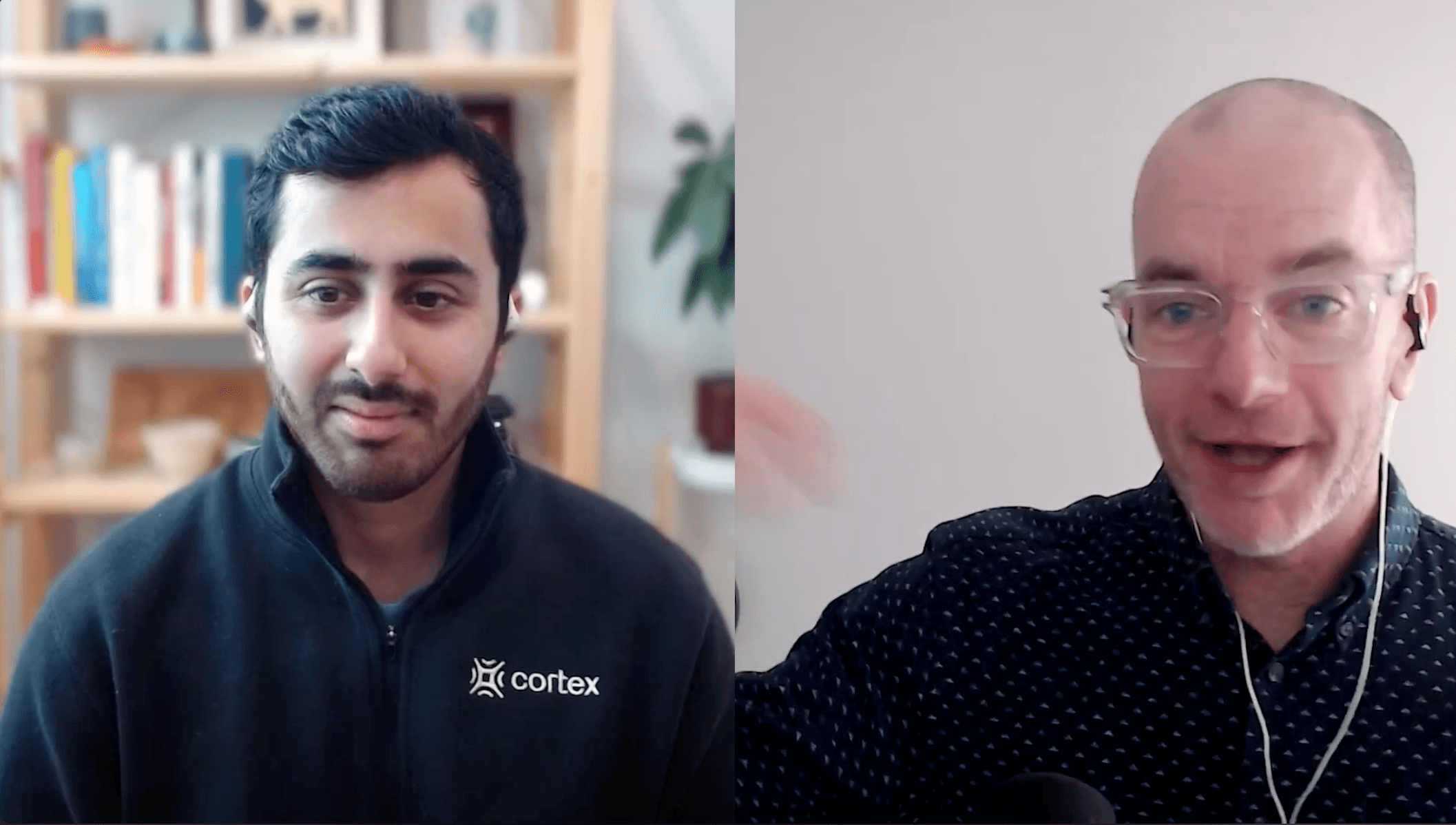
Rob Zuber on quality, metrics, and what it means to move in the right direction at CircleCI
In this episode of Braintrust, Cortex co-founder and CTO Ganesh Datta sits down with Rob Zuber, CTO at CircleCI, who has spent over a decade at the center of how engineering teams build and ship software. Rob shares his thinking on two challenges that are becoming harder to ignore as AI accelerates output: the quiet erosion of software quality, and the pressure to move fast without a clear sense of direction.
They discuss what made the best QA engineers so effective and why that mindset largely disappeared, how LLMs could help bring it back, and why engineering leaders need to think about metrics very differently depending on whether their teams are scaling a mature system or exploring uncharted territory.
March 26, 2026
Randy Shoup
SVP of Engineering at Thrive Market

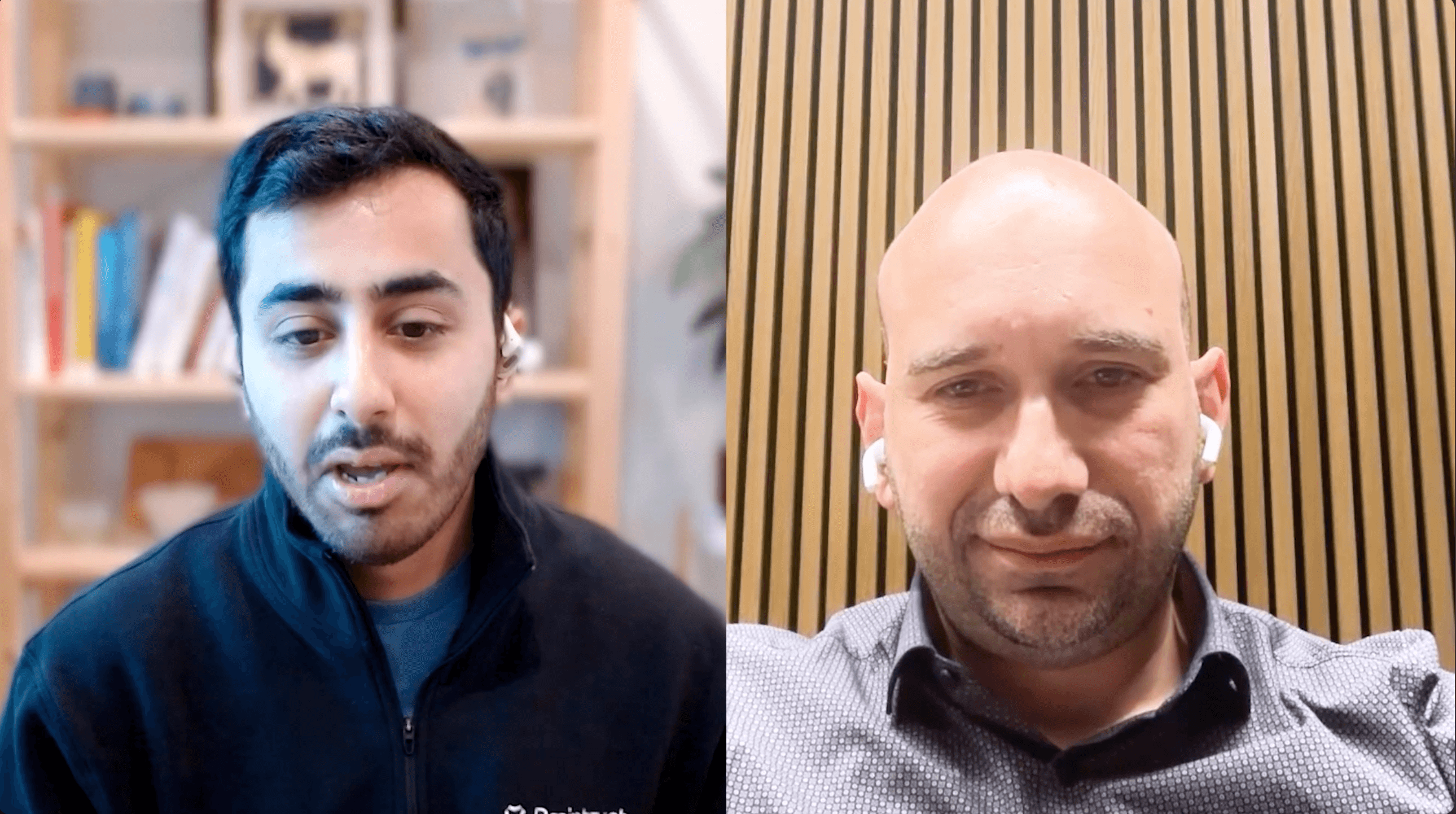
The platform engineering playbook for velocity, quality, and AI readiness at SIXT
In this episode of Braintrust, Cortex co-founder and CTO Ganesh Datta sits down with Boyan Dimitrov, CEO of SIXT, one of the world's largest mobility providers operating in over 100 countries. Boyan shares the story behind SIXT's engineering transformation, from shipping software once or twice a month to running nearly 10,000 deployments a month, and explains how extreme standardization became the engine driving both velocity and quality at the same time.
They discuss the pull-and-push model SIXT uses to drive platform adoption without mandating it from the top, how Boyan built a business case for platform investment by starting with specific problems rather than a platform-first vision, and how years of foundational standardization work is now paying significant dividends as SIXT accelerates its AI strategy.
March 12, 2026
Boyan Dimitrov
CTO of SIXT

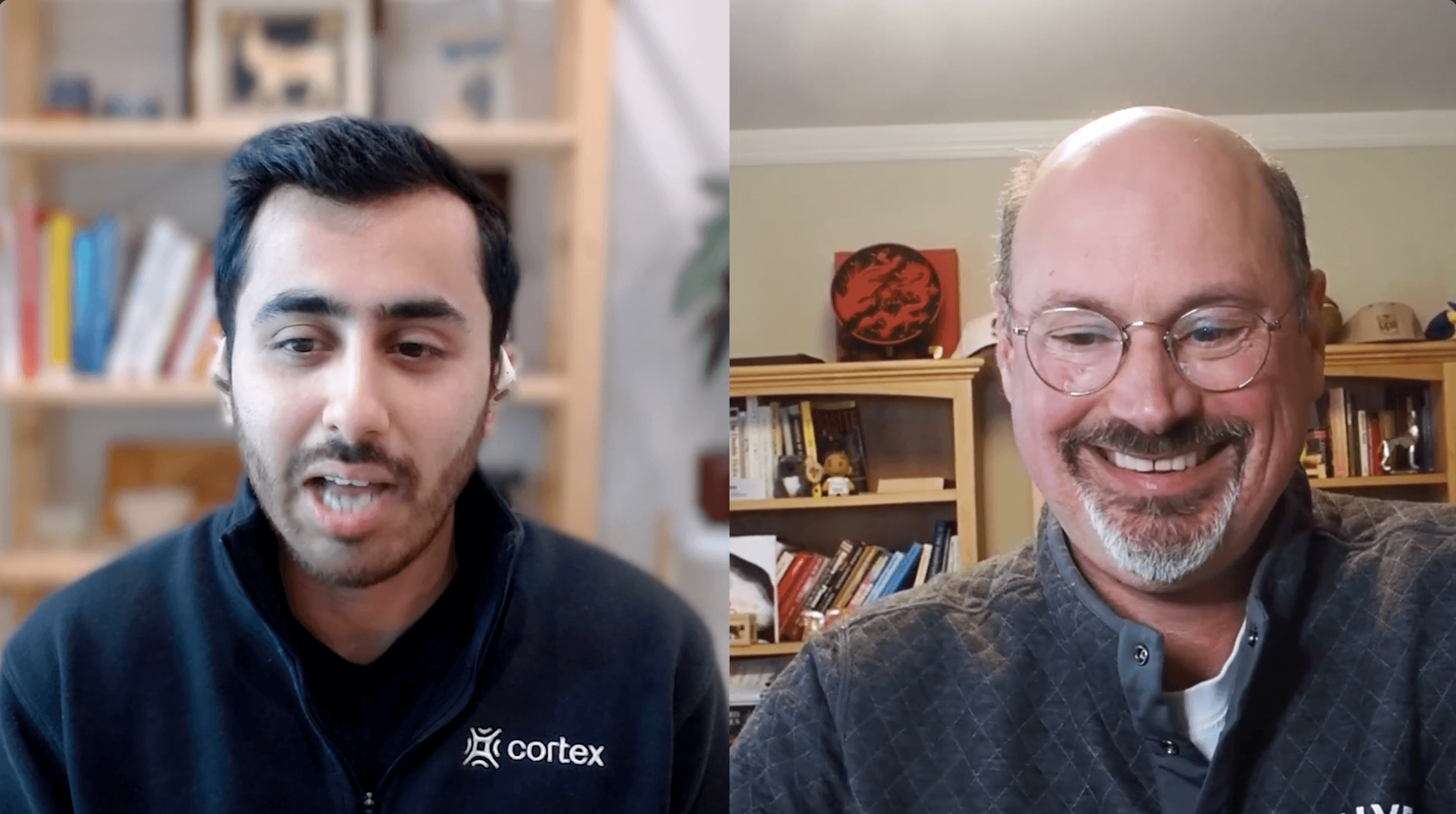
How Thrive Market's SVP of Engineering thinks about reliability culture
In this episode of Braintrust, Cortex co-founder and CTO Ganesh Datta sits down with Randy Shoup, SVP of Engineering at Thrive Market. Randy shares lessons from his leadership roles across multiple companies and explains how measurement and transparency can help teams build stronger engineering cultures.
Randy and Ganesh chat about how fear can block progress, why recovery speed matters more than trying to prevent every failure, and how teams improve through steady, incremental gains. They also discuss a few practical ways to build trust around metrics so organizations can use visibility for learning instead of punishment.
February 26, 2026
Randy Shoup
SVP of Engineering at Thrive Market